
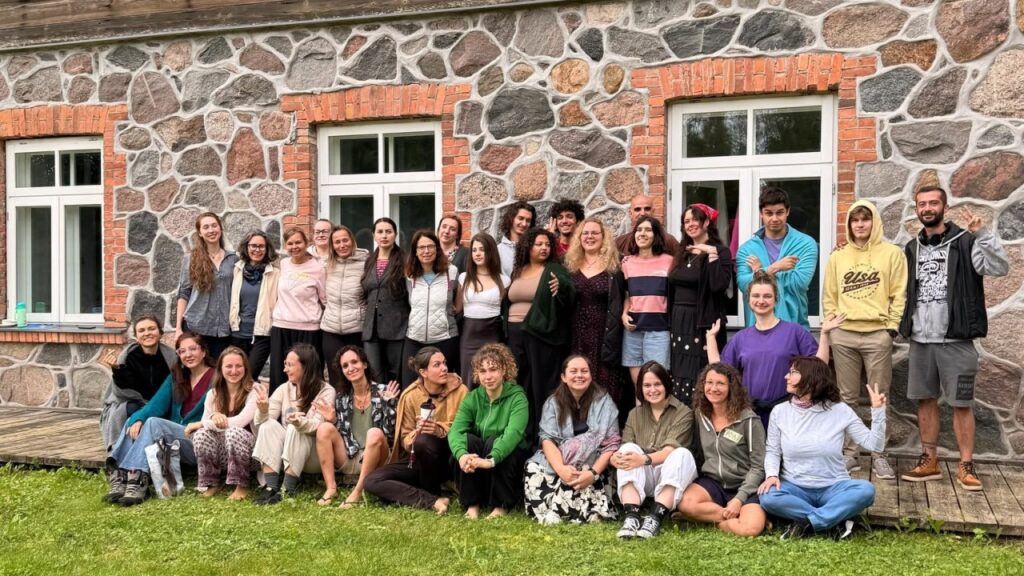
Two weeks ago, I was facilitating a training course for youth workers in Latvia with people from six different countries, most of us strangers on day one. The practice was led by CNVC trainer Aleksandra Gołaszewska, with the support of CNVC candidate Marija Cirule – president of KALM International Trainings, and myself.
By day five, we’d built something that’s a little bit hard to define – trust, maybe. Or the beginning of it.
We were there for Seed of Hope with Restorative Circles, an Erasmus+ training course hosted by KALM International Trainings, bringing together youth workers and educators from Italy, Czechia, Greece, Poland, Bulgaria, and Latvia. The topic: Nonviolent Communication and Restorative Circles – two practices that, on paper, sound simple. In practice, they require a bit more of our attention.
So let me try to explain what a restorative circle actually is, why it matters, and why more communities – schools, workplaces, NGOs, families – need something like it.
What a restorative circle is not
A restorative circle is not mediation in the traditional sense, and it’s definitely not a type of punishment. There’s no judge, no verdict, no “who’s right.” Most systems we grow up in – schools, workplaces, even friendships – resort to punitive logic when a difficult situation happens: we figure out who’s at fault, assign consequences, move on. It’s efficient. It’s also, often, hollow. People walk away either angry or resentful, and the relationship rarely heals.
What a restorative circle actually is
A restorative circle brings everyone affected by a conflict – not just the two people at the center of it – into a shared space, with a facilitator holding a structure for them to hear each other, rather than judgment. Everyone gets uninterrupted time to speak. The facilitator invites everyone to listen for what’s underneath the words: the need, the fear, the pain that led to the behavior. The goal isn’t to decide who was wrong and assign consequences, but to understand what happened, what everyone needs going forward, and how the relationship and the community around it can actually repair.
This is where Nonviolent Communication (NVC) becomes the supporting mechanism underneath the whole thing. NVC gives people language for a step most of us skip entirely: naming what we feel and what we need, instead of jumping straight to blame or defense. “You never listen to me” becomes something closer to “I felt alone, and I need to know my perspective matters here.” That changes everything about what can happen next in a conversation.
How to run a restorative circle: a practical starting point
Understanding what a restorative circle is meant to do is one thing – actually holding one is another. So before you close this tab thinking “interesting, but abstract,” let me walk you through the shape of the process itself.
This isn’t a complete manual (that takes years of practice, not one article written by someone you just came across online), but it’s enough to understand the shape of the process and try a simplified version yourself.
1. Before the circle: empathy, empathy, empathy
A restorative circle only works if everyone involved has genuinely agreed to be there – this isn’t something you can spring on people. Before bringing anyone together, the facilitator usually meets each person individually first in something we call a Pre-circle. This does two things: it lets you check whether the person is actually ready (forcing it too early can cause more harm), and it gives you a sense of what each person needs to feel safe enough to speak. They might need empathy (and sometimes, when there is pain, they might need lots of it) – this is the time to give it to them, by simply asking for their feelings and needs.
If someone isn’t ready to participate in the circle, that’s information, not a failure. The circle can wait until they have enough empathy.
2. Set the structure before the conversation starts
Once everyone’s in the circle, the facilitator opens by naming the agreements that make the space safe: one person speaks at a time, no interrupting, confidentiality where appropriate, and, critically, the purpose isn’t to determine who’s right. It’s to understand what happened and what’s needed to move forward.
3. Give everyone uninterrupted space to share their experience
Each person gets time to describe what happened from their perspective – not what they think happened to the other person, just their own experience. The facilitator’s job here is almost entirely about holding the space, not guiding content: staying grounded, resisting the urge to fix or interpret, and gently redirecting if someone slips into blame (“you always…”) back toward their own experience (“I felt…”).
This is where Nonviolent Communication becomes a real tool and can be quite practical. We can use what we call “reframing” from accusation to feeling + need, which changes the entire emotional temperature of the room. “You blamed me” becomes “I felt sad and frustrated, and I need to know I matter here.” Same thing, completely different door for the other person to walk through.
4. Reflect back what you’re hearing – feelings and needs
After each person shares, the facilitator (or, ideally, other participants, once the group has practiced this) reflects back what they heard – specifically the feeling and the need underneath it, not just a summary of events. “You felt sad, and you needed to be taken into account” sounds very different from “so you’re saying they interrupted you.”
This step is often where the shift happens. People start to hear each other, sometimes for the first time in the whole conflict.
5. Move toward needs, not solutions (yet)
Resist jumping to “so what should we do about it” too early. First, make sure everyone’s needs are actually named and acknowledged by the group. Only once that’s happened does the conversation naturally start to move toward: what would help repair this? What does accountability look like here, concretely?
Solutions that come after real listening tend to be more honest – and more likely to actually happen – than solutions people agree to just to end an uncomfortable conversation.
6. Close with something concrete, and follow up
End the circle with clear, specific commitments if they came up during the conversation – not vague statements like “we’ll do better,” but something checkable. And don’t treat the circle as one-and-done: restorative processes often work better with a follow-up check-in a few weeks later, to see whether the repair actually held in something we call a Post-circle.
A few honest notes, in case you decide to try this
Not every conflict is ready for a circle. If there’s an active safety concern, or one person isn’t ready to participate honestly, don’t force the format. Preparation conversations exist for a reason.
Start small. Try this structure with something a bit low-stakes before attempting it for something with real history and pain behind it.
What’s next after Latvia
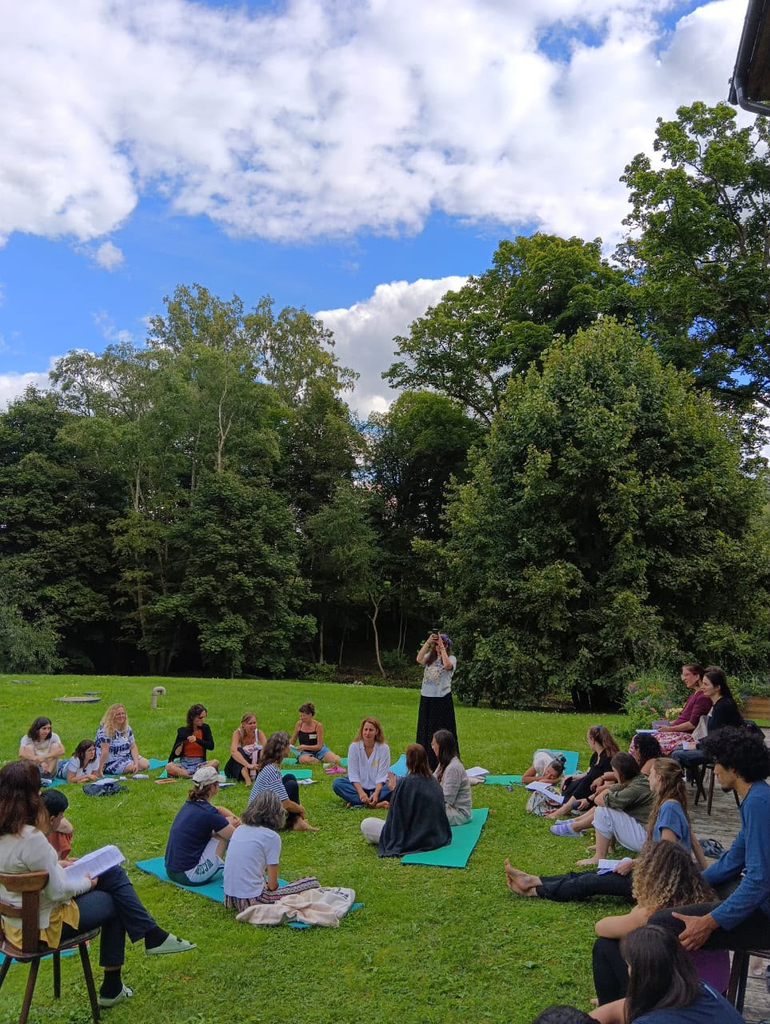
The educators from the training in Latvia are now heading back to Poland, Italy, Czechia, Greece, and Bulgaria to bring restorative practices into their own communities – youth centers, schools, organizations. They’ll be doing the same here in Sofia, and I’ll be sharing more about that work in the coming weeks.
If you’re someone who holds space for others – as a teacher, facilitator, manager, parent, organizer – I’d genuinely love to hear: have you used restorative approaches before? What got in the way, or what made it work?
🇪🇺 Seed of Hope with Restorative Circles is a Training Course supported by the Erasmus+ Programme and JSPA Latvia, organized by KALM International Trainings, together with partners from Italy (Youth4Youth), Czech Republic (NVC Brno, z.s.), Greece (Humanlinks), Poland (Fundacja Krok do Przodu), and Bulgaria (Creatosphere).
Toni P. Lyubenova is a qualified mediator, NVC practitioner, founder of Axolotl and co-founder of Creatosphere. She works with NGOs, Erasmus+ partnerships, and civil society organisations across Europe.